admin
Introduction
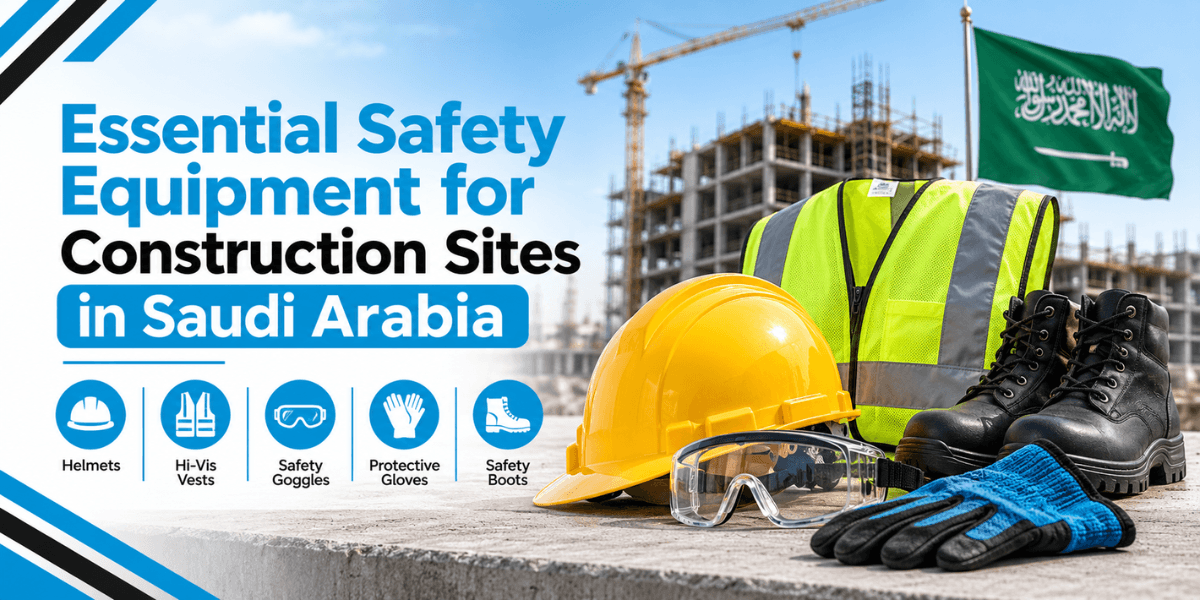
Construction projects play a major role in Saudi Arabia’s economic growth, from residential developments and commercial buildings to major infrastructure and industrial facilities. However, construction sites also expose workers to hazards such as falling objects, heavy machinery, electrical risks, dust, extreme heat, and falls from height.
Using the essential safety equipment for construction sites helps protect workers, reduce workplace accidents, and support compliance with applicable Saudi occupational safety requirements. The right equipment also improves productivity by helping workers perform their duties with greater confidence.
For construction companies, contractors, project managers, and site supervisors, understanding the correct safety equipment is an important part of responsible project management.
This guide covers the main types of construction safety equipment, PPE requirements, equipment selection, and practical safety measures for construction sites in Saudi Arabia.
1. Types of Construction Safety Equipment Used on Saudi Sites
The types of construction safety equipment required depend on the work being performed, the site’s layout, and the hazards identified during a risk assessment. Most construction projects need a combination of personal protective equipment, fall prevention systems, emergency equipment, and safety controls.
1.1 Safety Helmets and Hard Hats
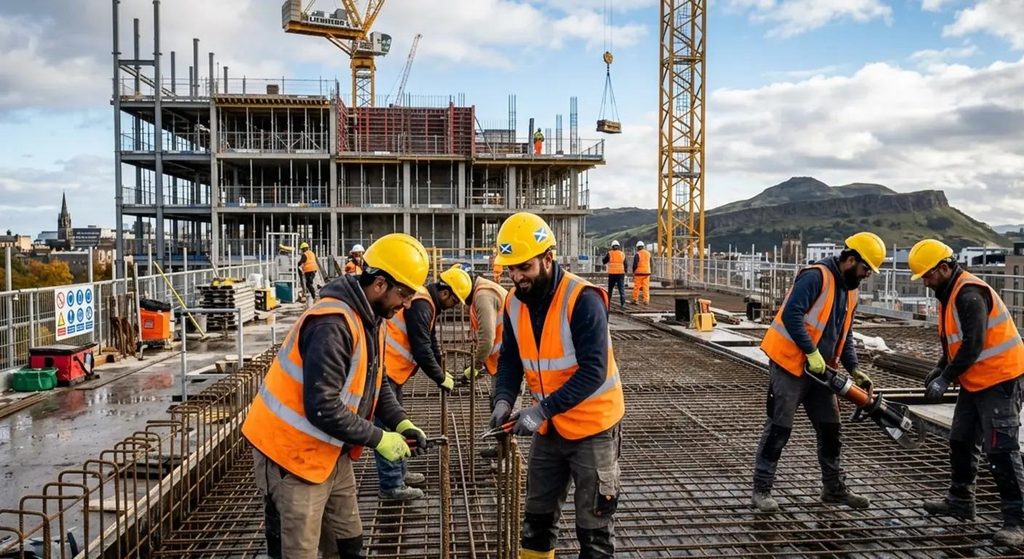
Safety helmets protect workers from falling objects, accidental impacts, and certain overhead hazards. They are particularly important on sites where cranes, scaffolding, and heavy materials are in use.
Choose helmets suitable for the identified risks, inspect them regularly, and replace damaged equipment according to the manufacturer’s guidance.
1.2 Safety Shoes and Protective Boots
Construction workers face risks from sharp materials, falling tools, uneven surfaces, and slippery floors. Protective footwear with suitable toe protection, slip-resistant soles, and puncture resistance can help reduce these hazards.
For projects involving wet concrete or chemical substances, select boots designed to withstand the specific exposure.
1.3 High-Visibility Vests and Workwear
High-visibility clothing helps equipment operators and other workers identify people in busy work areas. Reflective vests and suitable workwear are especially useful around moving vehicles, roadworks, and low-light areas.
Clothing should also be appropriate for the local climate. Breathable fabrics can improve comfort during outdoor work in Saudi Arabia’s hot weather.
1.4 Safety Gloves and Eye Protection
Gloves protect hands from cuts, abrasions, sharp edges, and selected chemical exposures. Safety goggles and face shields help protect workers from flying particles, dust, sparks, and splashes.
The equipment must match the task. For example, gloves designed for handling rough materials may not provide suitable protection for electrical work.
1.5 Respiratory and Hearing Protection
Cutting concrete, grinding, drilling, and demolition can produce harmful airborne dust. Appropriate respiratory protection may be necessary alongside dust extraction and other engineering controls.
Earplugs or earmuffs help reduce exposure to excessive noise from machinery and power tools. Employers should assess exposure levels and choose suitable protection rather than relying on PPE alone.
2. Fall Protection Equipment for Working at Heights
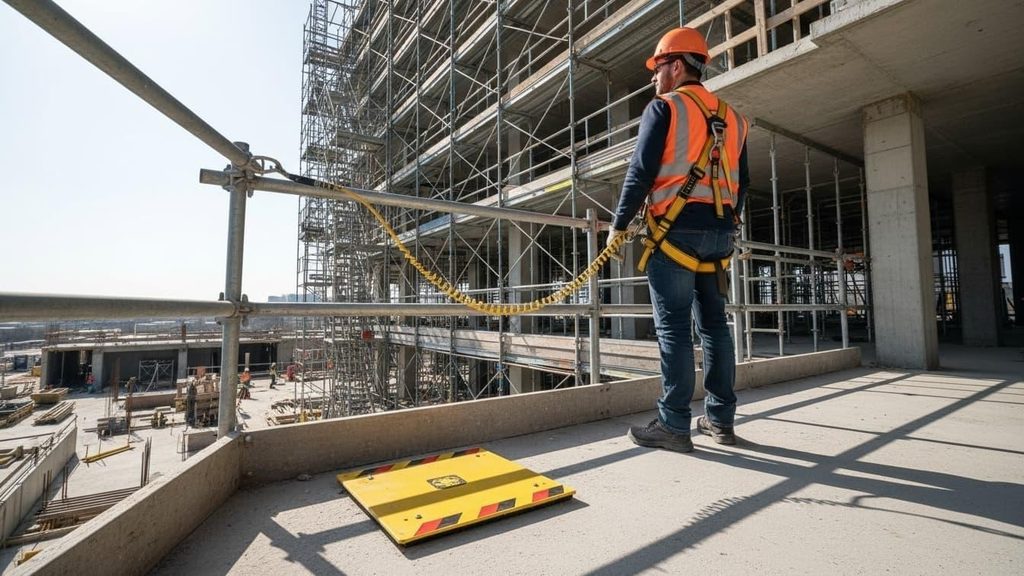
Falls from roofs, ladders, scaffolding, and unfinished floors can cause serious injuries. Construction projects should prioritize collective protection, such as secure guardrails and properly installed working platforms, wherever practical.
Additional equipment may include:
- Full-body safety harnesses.
- Suitable lanyards and energy-absorbing systems.
- Approved anchorage points and lifelines.
- Safety nets where appropriate.
- Secure ladders and properly assembled scaffolding.
Fall protection equipment must be selected for the specific task and used by trained workers. Harnesses, connectors, and anchorages require regular inspection, and a rescue plan should be available before work at height begins.
3. Fire Safety and Emergency Equipment
Every construction site needs suitable arrangements for emergencies. Depending on the work and site risk assessment, these may include:
- Fire extinguishers: Appropriate types for the expected fire hazards.
- First-aid kits: Supplies suitable for the workforce and site risks.
- Emergency alarms: Systems that warn workers about danger.
- Safety signs: Clear instructions for hazards, restricted areas, and evacuation routes.
- Emergency lighting: Lighting where needed to support safe evacuation.
- Spill-control kits: Materials for managing relevant fuel or chemical spills.
Employers should keep escape routes accessible, inspect emergency equipment, and train workers in emergency procedures. Saudi labor legislation addresses workplace precautions, protective equipment, training, and fire prevention.
4. What Safety Equipment Is Required on a Construction Site?
The answer depends on the work activity and its hazards. There is no single equipment list that fits every project.
The following table provides a practical starting point for construction managers and safety officers.
| Work activity or hazard | Typical protective equipment |
| General construction | Hard hat, safety footwear, suitable workwear |
| Moving vehicles and machinery | High-visibility clothing, designated pedestrian routes |
| Cutting and grinding | Safety goggles or face shield, suitable gloves, hearing protection |
| Dust-producing activities | Suitable respirator, dust extraction or suppression |
| Work at height | Guardrails, secure platforms, suitable fall protection |
| Electrical work | Task-appropriate electrical PPE and insulated tools |
| Welding and hot work | Welding helmet, protective clothing, suitable gloves |
| Chemical handling | Compatible gloves, eye protection, and other task-specific PPE |
| Emergency response | First-aid supplies, suitable fire extinguishers, alarms |
Note: This is a general selection guide, not a complete legal compliance checklist. Final requirements depend on the risk assessment, applicable regulations, equipment instructions, and project specifications.
5. PPE Requirements for Construction Workers in Saudi Arabia
Understanding PPE requirements for construction workers involves more than distributing helmets and safety vests.
The Saudi Ministry of Human Resources and Social Development outlines employer duties that include taking precautions against workplace hazards, providing appropriate personal protective equipment, informing workers about occupational risks, and training them to use protective equipment. Workers are also required to use and maintain their designated protective equipment.
Construction companies should follow these practical steps:
Conduct a Workplace Risk Assessment
Identify hazards associated with excavation, lifting, electrical installation, concrete work, demolition, and other activities. Select equipment based on the actual risks rather than issuing identical PPE for every task.
Provide Suitable and Properly Fitting Equipment
PPE should fit the worker, be compatible with other protective equipment, and be appropriate for the working environment. Workers should understand when and how to use each item.
Train Workers and Inspect Equipment
Provide clear instructions in languages workers understand. Inspect equipment before use, maintain inspection records where required, and remove damaged or unsuitable items from service.
Consider Saudi Arabia’s Climate
Outdoor workers may face high temperatures, strong sunlight, and dehydration risks. Employers should combine suitable clothing and other protective measures with access to drinking water, appropriate rest arrangements, shade, and applicable heat-stress precautions.
For project-specific requirements, consult the Saudi Ministry of Human Resources and Social Development and the Saudi Building Code.
6. How to Choose the Right Construction Safety Equipment
Selecting reliable equipment is essential for maintaining workplace safety and controlling project risks. Before purchasing, construction companies should consider the following factors:
- Quality and certification: Check applicable standards, product specifications, and conformity documentation.
- Task suitability: Confirm that equipment protects against the hazards identified in the risk assessment.
- Comfort and fit: Workers are more likely to use equipment correctly when it fits properly.
- Durability: Consider working conditions, frequency of use, maintenance needs, and replacement requirements.
- Supplier reliability: Choose suppliers that provide clear product information, consistent quality, and appropriate after-sales support.
Companies sourcing safety equipments in saudi arabia should compare products carefully and verify their suitability for the intended workplace. A reliable supplier can help procurement teams identify appropriate products for different construction activities.
7. Construction Site Safety Checklist
Use this checklist during routine site inspections to help maintain consistent safety practices.
Site inspection checklist
- Hard hats, safety footwear, and required PPE are available and in good condition.
- Fall protection systems and scaffolding have been checked before use.
- Tools and machinery have appropriate guards and safety controls.
- Fire extinguishers and first-aid supplies are accessible.
- Emergency exits and evacuation routes remain clear.
- Safety signs and barriers are visible and correctly positioned.
- Workers have received relevant safety instructions and training.
- Drinking water, shade, and heat-stress precautions are available as required.
- Reset checklistCopy checklist
This is a practical checklist, not a substitute for a formal site inspection or regulatory compliance assessment.
8. Safety Equipment Procurement for Construction Companies
A well-planned procurement process helps construction businesses maintain suitable PPE supplies and reduce delays caused by missing or damaged equipment. Companies should maintain an inventory, monitor replacement needs, and ensure that equipment is available before hazardous work begins.
Businesses also benefit from working with suppliers who understand industrial requirements and can support bulk orders for helmets, protective footwear, gloves, safety vests, and other essential products.
For businesses planning corporate events, employee recognition programs, or client appreciation campaigns, a corporate gifts supplier in saudi arabia may also help source branded merchandise. However, promotional merchandise should never be treated as a substitute for certified protective equipment.
Conclusion
The essential safety equipment for construction sites includes protective helmets, safety footwear, high-visibility clothing, gloves, eye protection, respiratory equipment, fall protection systems, and emergency supplies. The exact selection depends on the risks associated with each task.
In Saudi Arabia, construction companies should combine suitable equipment with worker training, regular inspections, effective emergency procedures, and appropriate measures for hot-weather conditions. By choosing reliable products and building a strong safety culture, employers can protect workers and support safer, more efficient construction projects.
Frequently Asked Questions (FAQs)
1. What safety equipment is required on a construction site?
Common equipment includes hard hats, protective footwear, high-visibility clothing, gloves, eye protection, and task-specific respiratory or hearing protection. Fall protection, fire extinguishers, first-aid supplies, and safety signs may also be necessary based on the site’s hazards and applicable requirements.
2. Is PPE mandatory for construction workers in Saudi Arabia?
Saudi labor legislation requires employers to take appropriate safety precautions, provide suitable personal protective equipment, inform workers about occupational hazards, and train them in its use. Workers must use and maintain their designated protective equipment.
3. What are the most important types of construction safety equipment?
The main categories are head protection, eye and face protection, hand protection, protective footwear, high-visibility clothing, respiratory protection, hearing protection, fall protection, and emergency equipment.
4. How often should construction safety equipment be inspected?
Equipment should be checked before use when required by its type and instructions, with more detailed inspections scheduled according to risk, manufacturer guidance, and applicable standards. Damaged equipment must be removed from service, and inspection records should be maintained where required.
5. How can companies choose a reliable safety equipment supplier in Saudi Arabia?
Companies should check product specifications, relevant certifications, conformity documentation, sizing options, availability, and supplier support. They should also ensure that equipment matches the workplace risk assessment and applicable Saudi requirements.