admin
admin
In today’s competitive business environment, printing remains one of the most effective ways to communicate with customers, promote products, and strengthen brand visibility. From business cards and brochures to packaging and large-format banners, professional printing plays a crucial role in marketing and communication.
However, many people are unsure about the different types of printing services available and which option best suits their needs. Understanding the available printing methods can help businesses and individuals make informed decisions, improve print quality, and optimize costs.
In this guide, we will explain what are the types of printing services, how they work, their benefits, and when to use them.
Why Understanding Printing Services Matters
Choosing the right printing method can significantly impact the appearance, durability, and overall effectiveness of your printed materials. Different projects require different techniques based on factors such as:
- Quantity of prints
- Material type
- Budget
- Turnaround time
- Print quality requirements
By understanding the available options, you can select the most suitable solution for your project while achieving professional results.
What Are the Types of Printing Services?
There are several printing methods used across various industries. Each printing service is designed for specific applications and offers unique advantages.
The most common printing services include:
- Digital Printing
- Offset Printing
- Screen Printing
- Large Format Printing
- UV Printing
- Flexographic Printing
- Gravure Printing
- 3D Printing
Let’s explore each one in detail.
Digital Printing
What Is Digital Printing?
Digital printing is one of the most popular modern printing methods. It involves transferring digital files directly onto paper, vinyl, fabric, or other materials without the need for traditional printing plates.
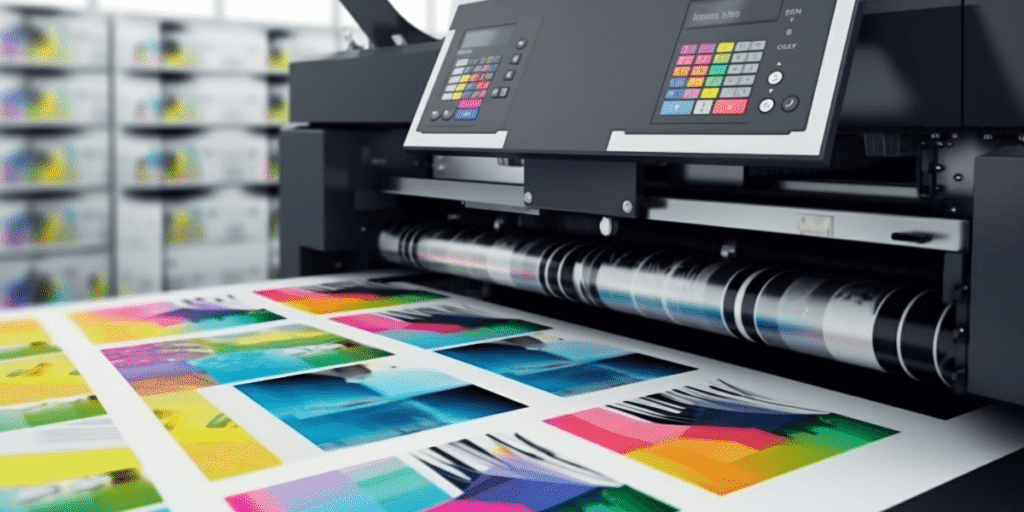
This method is widely used for:
- Business cards
- Flyers
- Brochures
- Posters
- Catalogs
- Personalized marketing materials
Benefits of Digital Printing
- Fast turnaround times
- Cost-effective for small print runs
- Easy customization and personalization
- High-quality color output
- Minimal setup requirements
Best Use Cases
Digital printing is ideal when you need smaller quantities, quick production, or variable data printing such as personalized names, addresses, or promotional messages.
Offset Printing
What Is Offset Printing?
Offset printing is a traditional printing process that uses metal plates and rubber blankets to transfer ink onto paper. It is commonly used for large-volume printing projects where consistency and quality are essential.
Offset printing remains a preferred choice for:
- Magazines
- Books
- Newspapers
- Corporate brochures
- Product catalogs
Benefits of Offset Printing
- Exceptional image quality
- Consistent color accuracy
- Cost-effective for large quantities
- Supports a wide range of paper stocks
- Produces sharp and detailed images
Best Use Cases
Offset printing is best suited for high-volume projects where maintaining consistent quality across thousands of copies is important.
Digital vs Offset Printing
One of the most common questions businesses ask is about digital vs offset printing. Both methods have advantages, but the right choice depends on your project requirements.
Digital Printing Advantages
- Faster production
- Lower setup costs
- Ideal for short runs
- Easy customization
Offset Printing Advantages
- Better for large-volume printing
- Superior color consistency
- Lower per-unit cost for high quantities
- Supports specialty inks and finishes
Which One Should You Choose?
When comparing digital vs offset printing, digital printing is generally the better option for small orders and quick turnaround projects. Offset printing becomes more economical and efficient when producing large quantities.
The decision should be based on your budget, timeline, and quantity requirements.
Screen Printing
What Is Screen Printing?
Screen printing involves pushing ink through a mesh screen onto a surface. Each color requires a separate screen, making the process suitable for bold and vibrant designs.
Screen printing is commonly used for:
- T-shirts
- Apparel
- Promotional products
- Signage
- Packaging
Benefits of Screen Printing
- Durable prints
- Vibrant colors
- Suitable for various materials
- Excellent for bulk production
Best Use Cases
Businesses often choose screen printing for branded merchandise, uniforms, and promotional products that require long-lasting designs.
Large Format Printing
What Is Large Format Printing?
Large format printing is used to create oversized graphics and visual displays. Specialized printers can produce high-resolution prints on large materials such as vinyl, canvas, and fabric.
Typical applications include:
- Banners
- Trade show displays
- Wall graphics
- Outdoor signage
- Vehicle wraps
Benefits of Large Format Printing
- High visibility
- Excellent image quality
- Durable outdoor applications
- Ideal for marketing campaigns
Best Use Cases
Large format printing is perfect for businesses looking to attract attention at events, retail locations, or public spaces.
UV Printing
What Is UV Printing?
UV printing uses ultraviolet light to instantly cure ink as it is printed onto a surface. This advanced technology allows printing on a wide variety of materials, including glass, wood, metal, acrylic, and plastic.
Benefits of UV Printing
- Fast drying process
- Vibrant colors
- Scratch-resistant finishes
- Environmentally friendly printing
- Works on multiple surfaces
Best Use Cases
UV printing is often used for custom signage, packaging, promotional products, and decorative displays that require durability and visual impact.
If your business is looking for premium-quality branding materials and customized products, professional uv printing services can help create durable and eye-catching results across a wide range of surfaces.
Flexographic Printing
What Is Flexographic Printing?
Flexographic printing, often called flexo printing, uses flexible relief plates and fast-drying inks. It is commonly used in packaging production.
Industries use flexographic printing for:
- Food packaging
- Labels
- Plastic bags
- Corrugated boxes
Benefits of Flexographic Printing
- High-speed production
- Suitable for various materials
- Cost-effective for large runs
- Efficient for packaging applications
Best Use Cases
Manufacturers and packaging companies frequently rely on flexographic printing for large-scale production.
Gravure Printing
What Is Gravure Printing?
Gravure printing uses engraved cylinders to transfer ink onto materials. It delivers exceptional image quality and is commonly used for extremely high-volume projects.
Applications include:
- Packaging
- Magazines
- Decorative laminates
- Product wraps
Benefits of Gravure Printing
- Outstanding print quality
- Consistent results
- High-speed production
- Long printing runs
Best Use Cases
Gravure printing is most suitable for industrial-scale printing projects where millions of impressions are required.
3D Printing
What Is 3D Printing?
Unlike traditional printing methods, 3D printing creates three-dimensional objects by layering materials based on digital designs.
Industries using 3D printing include:
- Manufacturing
- Healthcare
- Architecture
- Engineering
- Product development
Benefits of 3D Printing
- Rapid prototyping
- Custom manufacturing
- Reduced production waste
- Design flexibility
Best Use Cases
Businesses use 3D printing to develop prototypes, create customized products, and accelerate innovation.
Choosing the Right Printing Service
Selecting the right printing solution depends on several important factors:
Project Volume
Small runs typically benefit from digital printing, while large-volume projects often achieve better value with offset printing.
Material Requirements
Different printing methods support different surfaces. For example, UV printing can handle materials that traditional printing methods cannot.
Budget
Consider setup costs, production costs, and long-term value before making a decision.
Turnaround Time
If you need materials quickly, digital printing is usually the fastest option.
Desired Quality
For projects requiring precise color matching and premium quality, offset printing remains an excellent choice.
Enhance Your Marketing with Printed Products
Printed materials continue to be a powerful marketing tool despite the growth of digital advertising. Businesses can strengthen brand recognition through brochures, catalogs, signage, packaging, and branded promotional gifts that leave a lasting impression on customers.
Combining high-quality printing with strategic marketing materials helps businesses stand out in a crowded marketplace and build stronger customer relationships.
Conclusion
Understanding the different types of printing services allows businesses and individuals to choose the best printing method for their specific needs. Whether you require fast and flexible digital printing, large-scale offset printing, custom UV printing, or specialized packaging solutions, each method offers unique advantages.
If you have ever wondered what are the types of printing services, the answer depends on your project goals, budget, materials, and quantity requirements. Evaluating factors such as production volume and turnaround time will help you determine the right solution.
When comparing digital vs offset printing, remember that digital printing is ideal for short runs and personalization, while offset printing excels in large-scale production and consistent quality. By selecting the appropriate printing service, you can maximize the impact of your printed materials and achieve professional, high-quality results every time.